
The Secret Sauce for Happy Ferns and Flowers
I’ve talked to lots of y’all who are timid about growing ferns because they can be finicky. Today I’m going to share my secret sauce recipe for keeping ferns and other flowers vibrant and green! If you have spent any time in the garden with me, you have probably heard me talk about my “secret sauce.” It is simple, affordable, and easy to mix up at home.

Here is my Secret Sauce for happy ferns:
Recipe:
1 gallon warm water
1 tablespoon Epsom Salt
That’s its! Just two simple (and affordable!) ingredients.
Directions: Dissolve 1 tablespoon of plain Epsom salt (check the pharmacy aisle—you don’t want the scented bath kind) in a gallon sized pitcher of very warm water. I like to stir my salt water with a spatula to really mix it up well, then simply pour over thirsty ferns and flowers. It’s important to make sure the Epsom salt is fully dissolved, otherwise it could damage your plants! If salt sits on a fern, it will kill it.
How Often to Use It
This is where less really is more.
Apply every 4 to 6 weeks if needed
Use during active growth, spring through early fall
Skip it in winter when plants are resting
Overdoing it can actually cause problems, especially in containers.
Too much can lead to salt buildup in the soil and even block other nutrients like calcium and potassium.
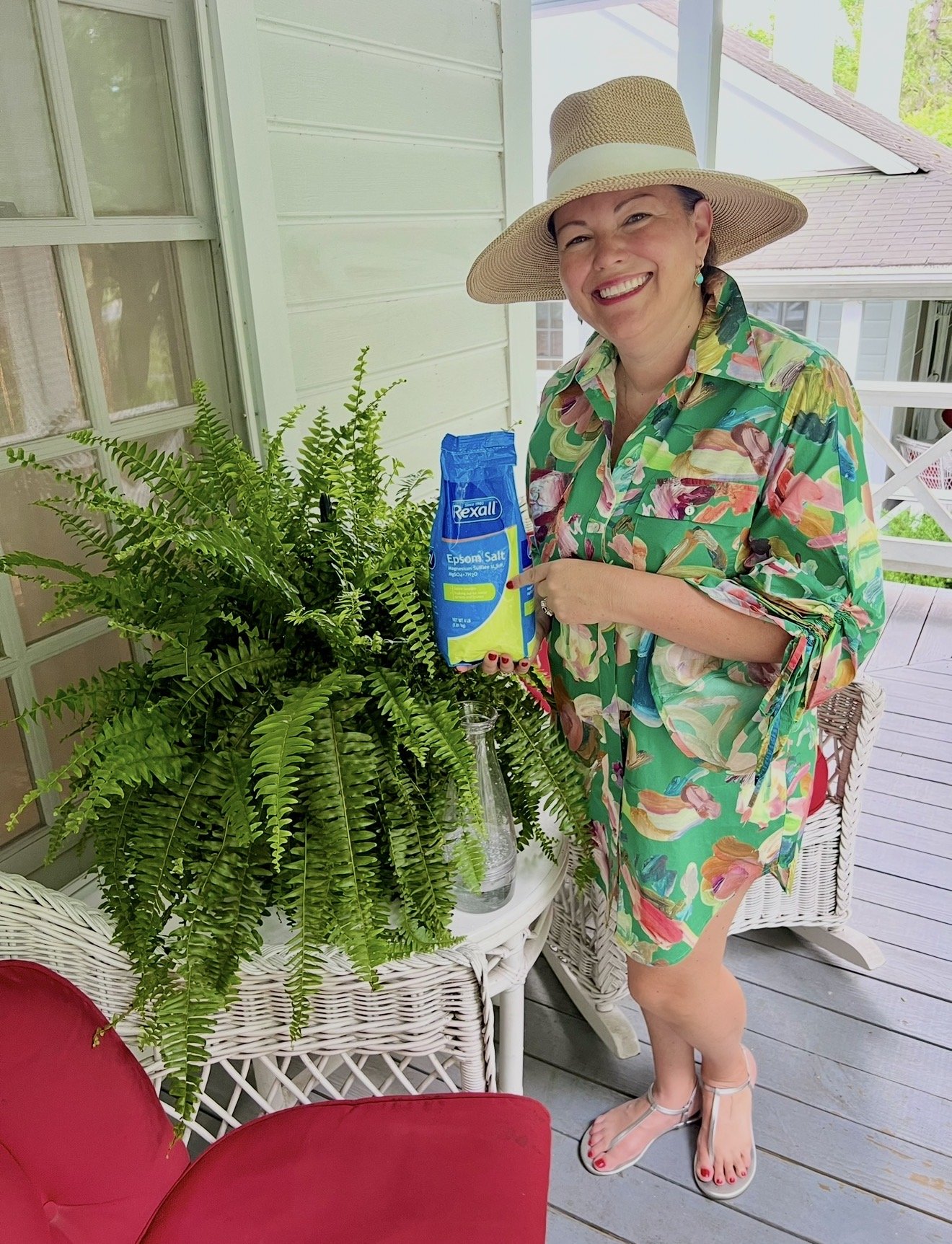
What Epsom Salt Is… and What It Is Not
Let’s stop here and clear something up, because this is where a lot of folks get confused. Epsom salt is NOT a fertilizer.
It does not contain the three key nutrients that plants truly depend on, which are:
Nitrogen for leafy growth
Phosphorus for roots and blooms
Potassium for overall plant health
So if your plants are struggling, Epsom salt alone is not going to fix the problem.
What it is is magnesium sulfate, and that matters because magnesium plays a key role in helping plants stay green and healthy.
Think of it like a supplement, not a full meal.
Here comes a super-short science lesson:
Epsom salt contains high levels of the micronutrients magnesium and sulfur, essential elements for plants that help them grow, produce more flowers, and increase chlorophyll production (which makes them greener!). Both magnesium and sulfur aid in photosynthesis and help plants absorb the three macronutrients: nitrogen, phosphorus, and potassium.
Why I Use It in the Garden
When used correctly, Epsom salt can:
Support chlorophyll production, which gives you that rich green color
Help plants better use nutrients already in the soil
Improve overall vigor when magnesium is lacking
It works alongside your fertilizer, not instead of it.
Ferns, annuals, and even some vegetables can benefit from that extra boost, especially in sandy soils where nutrients tend to wash out quickly.
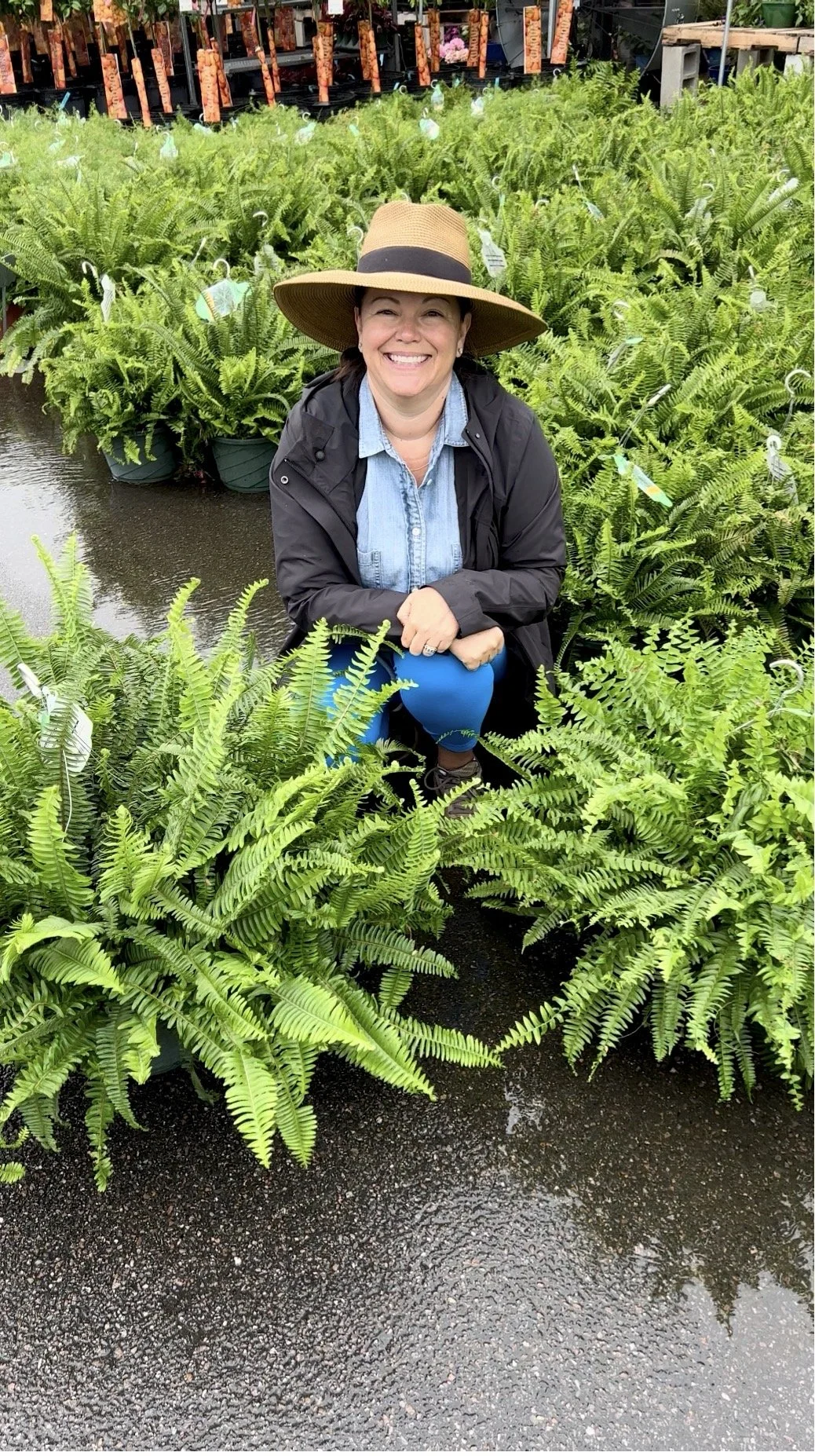
Ferns That Can Benefit
Some of our favorite garden ferns respond beautifully when used this mixture, especially:
Boston Fern
Kimberly Queen Fern
Macho Fern
Rabbit’s Foot Fern
Lemon Button Fern
A light application can help perk them up if you notice pale leaves or slower growth.
Ferns to Leave Alone
There are also ferns that prefer a more natural, woodland environment and do not appreciate added salts at all.
Avoid using Epsom salt on:
Maidenhair Fern
Japanese Painted Fern
Ostrich Fern
Cinnamon Fern
Christmas Fern
Bird’s Nest Fern
Staghorn Fern
These thrive in rich organic soil with consistent moisture, not extra inputs.

Can I Use Epsom Salt on Autumn Ferns?
The answer: It depends.
Autumn ferns fall somewhere in the middle when it comes to Epsom salt.
They are a little more adaptable than some woodland ferns, but they still prefer rich, organic soil and consistent moisture over added inputs.
You can use Epsom salt sparingly if the plant is showing signs of stress, like pale foliage or slower growth, especially in containers or poorer soil. Stick to the standard mix and apply no more than every 4 to 6 weeks during the growing season.
If your Autumn fern is already healthy and deep green, it is best to leave it alone. Focus on good soil, steady moisture, and the right light. That is what really keeps them thriving.
What About Flowers and Vegetables? Can I use Epsom Salt on Them?
You can also use this mix on a few other garden favorites.
For vegetables like tomatoes, peppers, and eggplant:
Apply every 2 to 4 weeks once plants are established
Especially helpful in nutrient poor or sandy soils
For annual flowers like petunias, geraniums, and impatiens:
Apply about once a month
Helps encourage deeper green foliage and stronger blooms
One More Thing to Remember
Even when you are using Epsom salt, your plants still need:
A good quality fertilizer
Healthy soil with organic matter
Consistent watering
Ferns especially love moisture, stability, and rich soil. They are not heavy feeders, but they do appreciate the right environment.
Epsom salt can be a helpful little boost in the garden when used intentionally and in moderation.
It is not a cure all, and it is not a substitute for good plant care.
But when you pair it with healthy soil and a solid feeding routine, it can make a noticeable difference in keeping your ferns lush and your flowers happy.
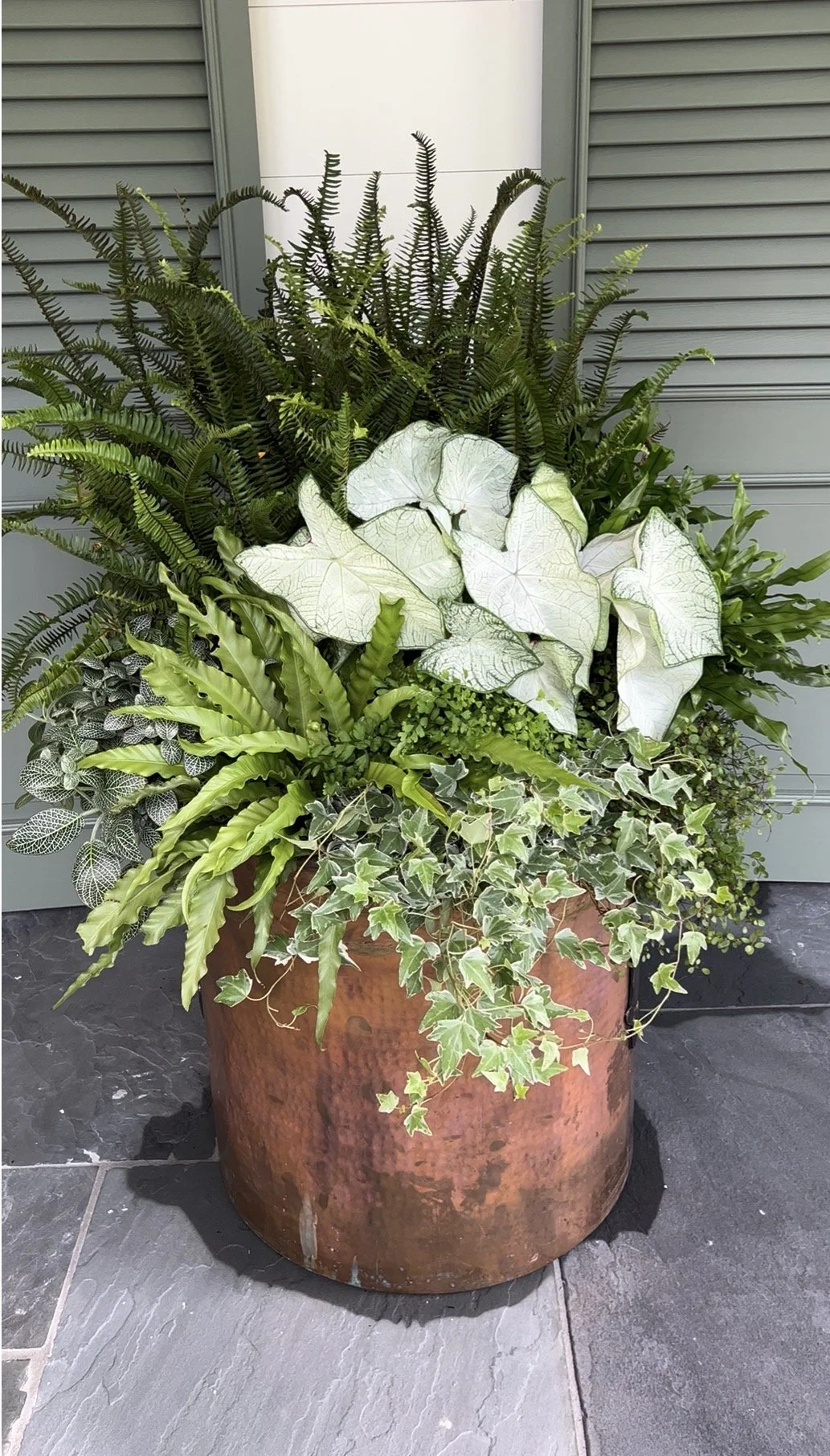
Ferns are the backbone of Southern shade gardens, but they thrive when planted correctly and watered consistently, with a dash of my secret sauce for an extra boost.
A Moisture Meter is essential for helping you know exactly when it is time to water, so be sure to invest in one for your garden!

Let me know if you try my “secret sauce.” I hope
your ferns and flowers will be green and happy all summer long!