
WHAT TO DO BEFORE, DURING, AND AFTER A FREEZE TO PROTECT YOUR PLANTS
Do you have a hard freeze coming your way? If you’re worried about how to keep the frost from killing your plants, shrubs and other landscaping, here’s how to protect your plants the RIGHT way! Winter’s chill is on the way, and as gardeners, we know that a hard freeze can do some serious damage to our precious plants (and our curb appeal!) But don’t worry! With a little bit of prep, you can help your garden survive the cold and bounce back come spring. Here’s a simple guide to keep your plants cozy before, during and after a freeze. ❄️
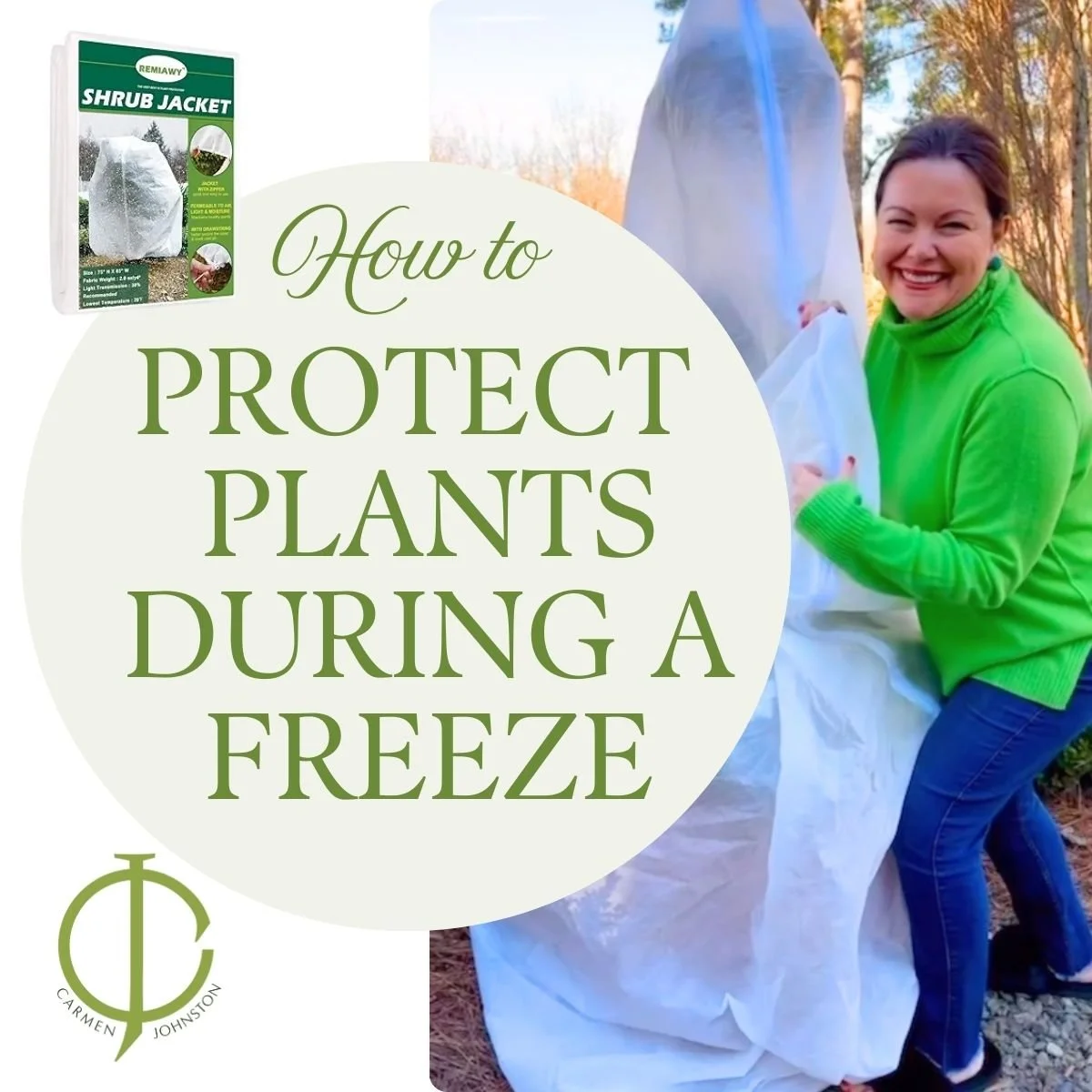
To protect your garden before a hard freeze, focus on these steps:
1. Insulate and Protect Plants
Cover Tender Plants: Use frost cloths, horticultural fleece, or plant row covers to protect herbaceous perennials, vegetables, and other frost-sensitive plants from direct exposure to freezing temperatures. Be sure to secure them against wind. You can also use sheets, beach towels or blankets, but NEVER use plastic because it smothers your plants!! Avoid using plastic directly on plants. Plastic can trap moisture and cause more harm than good.
Why cover with frost cloth?
Frost cloth traps radiant heat from the soil, prevents frost from forming directly on leaves, and can raise temps around your plants by 2–8°F, often enough to save them. Be sure the fabric touches the ground to trap warmth, and secure it so it won’t blow away.
Pro tip: Put frost cloth on before sunset, and anchor it to the ground so the warmth stays trapped.
MY FAVORITE FROST JACKETS
2. Mulch the Root Zone
Apply a thick layer (3-6 inches) of mulch around the base of perennial plants, shrubs, and trees to help insulate roots and moderate soil temperatures. Mulch is one of the best insulators in your garden. A thick layer of pine straw, leaves, or bark chips helps regulate soil temperature and locks in moisture. It also protects roots from freezing and thawing cycles that can cause damage.
3. Water the Garden Well
Pre-Freeze Hydration: Moist soil holds heat better than dry soil, so water plants thoroughly in advance of the freeze. Moist soil offers an added buffer against sudden temperature drops, so give your plants a good drink before a cold snap. Avoid watering when temperatures are below freezing, but if a frost is in the forecast, watering the day before can help protect roots. Watering in the morning allows the moisture to soak in before temperatures plummet overnight. DO NOT WATER THE FOLIAGE, focus on the roots only. I like to use a Soaker Hose for this!
4. Bring Potted Plants Inside
Potted plants are especially vulnerable since their roots are above ground. Move containers to a sheltered spot like a garage, porch, or sunroom. If they’re too heavy to move, wrap the pots with blankets or bubble wrap to insulate them. What should you bring inside? Tropicals, houseplants, citrus, succulents, any patio ferns, and ANY potted plants that aren’t cold-hardy need to ride out the cold weather indoors. They should be safe in your garage or basement if you don’t want to bring dirt into the house.
5. Prune and Harvest
Remove Damaged Growth, but hold off on major pruning until late winter or early spring. Pruning too soon can encourage new growth that will be damaged by cold. Instead, remove only dead or diseased parts to keep plants healthy through the winter. Also, harvest all of those veggies and herbs from your garden!
Plan Ahead for Next Year
Once spring arrives, take notes on what worked well and what didn’t. A little planning now will make next winter’s prep easier and even more effective. If you’re not sure whether a plant can handle the cold, treat it like it can’t. A little extra care goes a long way in keeping your garden thriving through winter.
Winter may be quiet in the garden, but it’s also a time of preparation and promise. Every bit of effort you put in now—mulching, covering, or moving plants—pays off when everything bursts back to life in the warmer months. So pour yourself a cup of something warm, take one last stroll through your garden, and know that with a little love, your plants will be ready to greet the sunshine again soon.

Here are my favorite items to protect my Home & Garden all winter long
Do you know your frost-free date for your gardening zone? 🌱❄️ It’s so important for planning when to plant! Find your date here and get ready to make this your best gardening season yet. 💚
How to protect your Home during a hard freeze
Protect Your Pipes
Insulate exposed pipes in crawl spaces, garages, attics, and along exterior walls. Cover all outdoor hose bibs with insulated faucet covers and disconnect hoses so water is not trapped and frozen. Faucet covers are inexpensive, easy to find at stores like Walmart, Home Depot, and Lowe’s, and they work well all winter. These are my favorite Insulated Faucet Covers that work really well all winter long.
Know Your Water Shut Off Valve
Locate your main water shut off valve now so you can act quickly if a pipe bursts. Quick response can significantly reduce water damage.
NOTE: If you are not living in the home or are on vacation, it may benefit you to turn the water off at the main and drain all the pipes during winter. To do this, first open a few indoor and outdoor faucets and allow the water to run. Then, locate the water main (usually a black box in the ground near the road or driveway entrance) and turn it off until water stops flowing completely. Sometimes a special tool is required, but usually you can just twist the knob and turn it off. Be careful when turning the water back on, by leaving a faucet open and running, so pressure does not build up and damage a pipe when the water returns.
Keep Water Moving
On especially cold nights, allow faucets to drip slightly. Moving water is less likely to freeze and can help prevent pipe bursts during prolonged cold spells.
Let Warm Air Reach Your Pipes
Open cabinet doors under kitchen and bathroom sinks, especially those located on exterior walls. This allows warm indoor air to circulate around plumbing and helps prevent freezing.
Seal Out Cold Air
Check doors, windows, crawl space vents, and garage areas for drafts. Use weather stripping, door sweeps, or temporary draft blockers to keep cold air from reaching pipes inside walls.
Maintain Heat Inside the Home
Even if you are away, keep your thermostat set no lower than 55 degrees. Consistent heat is one of the best protections against frozen pipes.
Prepare for Power Outages
Freezing weather often brings power interruptions because the weight of ice can easily break tree limbs that can fall onto power lines. This happens more often in the south, since we don’t typically have snow and ice annually, and our trees are not used to bearing the weight of ice. Have flashlights, batteries, blankets, extra food and emergency supplies ready just in case. Here’s my list of Emergency Preparedness Supplies.
Taking these simple steps ahead of time can protect your home, save money, and give you peace of mind during severe winter weather.
How to protect your home and Garden in Winter
Don’t let the cold catch your plants off guard. Here are the essential gardening tools you’ll need to protect them: frost cloths, hose bibb covers, and a good watering system (hydration is key!). Let’s keep your garden safe and thriving all season long.
My Go-To Christmas Storage Hacks You’ll Love


A few years ago, I used to decorate clients' homes for Christmas, and along the way, I learned some game-changing storage hacks. Since we were responsible for setup, breakdown, and storage, I had to keep things super organized—and these are the go-to solutions that have made my life (and my clients') so much easier.
MY MUST-HAVES WHEN TRAVELING

Make every journey smooth with a durable suitcase, a handy hat clip, and a sound machine for comfort on the go. Pack smart with travel must-haves designed to keep you organized and stylish. Whether it’s a quick getaway or a long adventure, these essentials ensure you’re ready for anything.
MY FAVORITE SELF CARE ESSENTIALS

Embrace self-care with Obagi skincare for a fresh start, candle lamp warmers to set the mood, and cozy sets paired with slippers for ultimate relaxation. Prioritize moments of rest and rejuvenation that leave you glowing inside and out. A little indulgence is the perfect way to reset and recharge for the year ahead.